EUROCORPS
A FORCE FOR
THE EUROPEAN UNION
AND NATO
Address
Eurocorps Headquarters
Quartier Aubert de Vincelles
4 Rue du Corps Européen
BP 70082
F-67100 STRASBOURG
HQ Support Battalion
Quartier Lizé
3 Rue de Solignac
BP 67081
F-67100 STRASBOURG
LASTEST NEWS
COMMANDER’S Biography
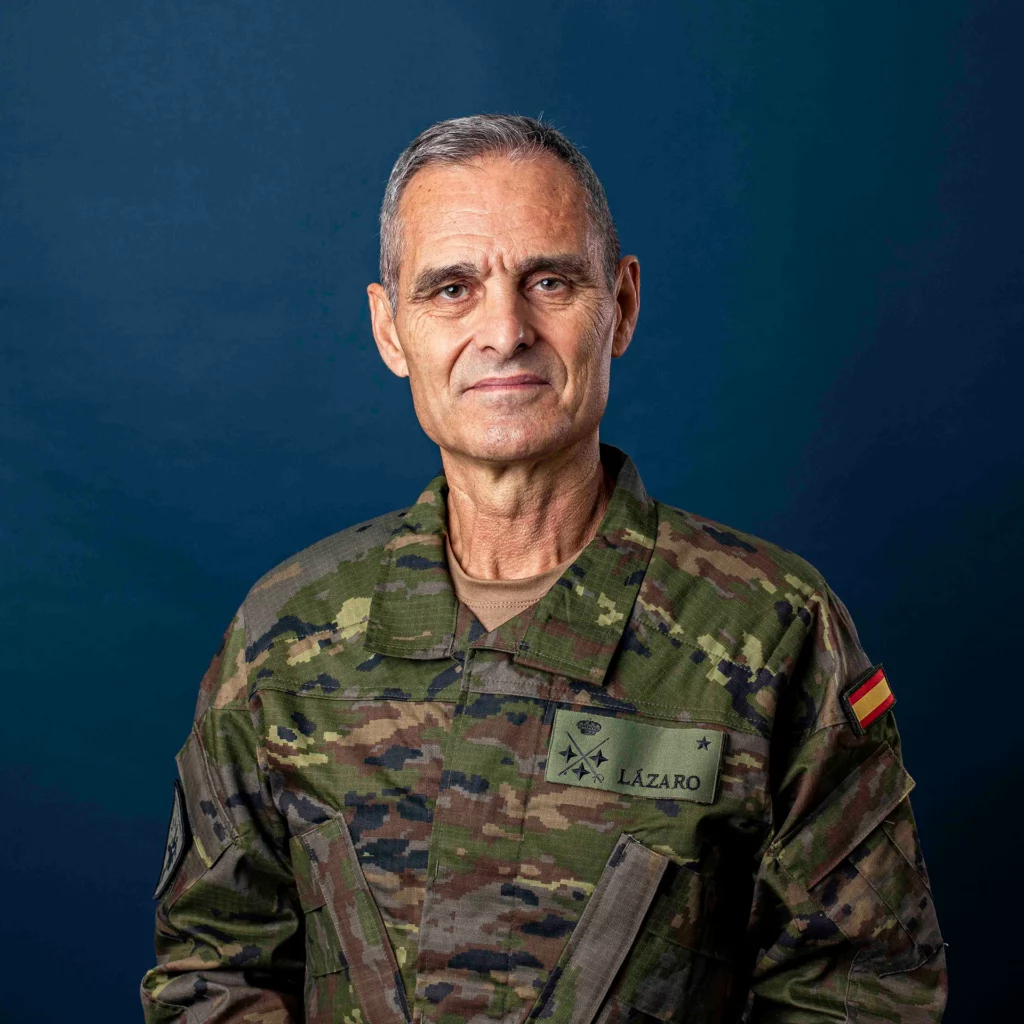
Lieutenant General Aroldo Lázaro Sáenz was born in 1962 in Sidi Ifni, a former Spanish territory in North Africa. He joined the Spanish Army’s Military Academy in 1981 and was commissioned as a First Lieutenant in 1986, beginning his career as a platoon leader in the Spanish Legion.
Throughout his service in the land forces, he has held a broad range of command position in various units, from infantry platoon leader to brigade commander.
Promoted to Captain in 1990, he commanded a company in the Balearic Islands and later in the Spanish Legion. As a Major, he held several national and international positions, including in the Spanish Doctrine Command, NATO Rapid Deployable Corps Spain (NRDC-SP), and EUROFOR HQ in Florence, Italy. In 2008, as a Lieutenant Colonel, he returned to NRDC-SP to lead the Organization and Coordination Cell within the Directorate of Staff (DOS). In 2009, he was assigned to the 10th Spanish Mechanized Brigade as Chief of Staff.
COMEC
Commanding General of Eurocorps
Lieutenant General OF - 8
LEADERSHIP STAFF
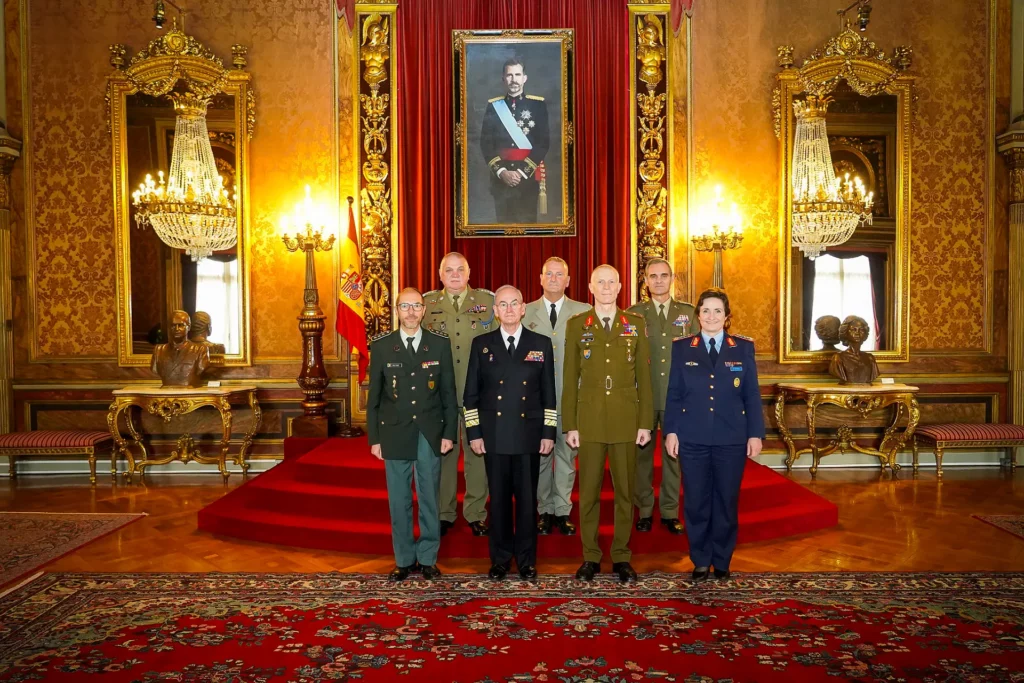
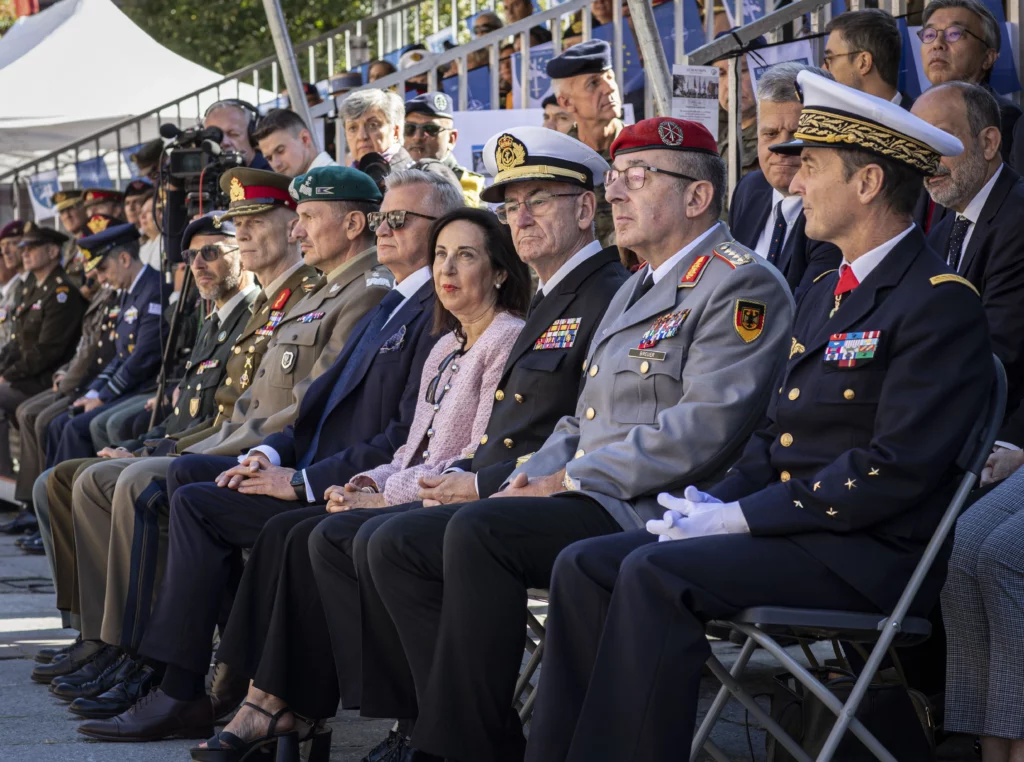
The Commanding General of Eurocorps (COMEC) holds the rank of Lieutenant General (NATO three-star). The Deputy Commander (DCOM) is a Major General (NATO two-star). The headquarters staff is led by the Chief of Staff (COS), also a Major General (NATO two-star), supported by three Deputy Chiefs of Staff (DCOS) for Operations, Support, and Plans, each holding the rank of Brigadier General (NATO one-star).
These generals form the Command Group. The Commanding General is supported by advisors: the Legal Advisor (LEGAD), Political Advisor (POLAD), Public Affairs Advisor (PAA), Medical Advisor (MEDAD), Gender Advisor (GENAD), as well as the Air Representation (AREC) and Navy Representation (NAVREP).
Together, the Command Group, advisors, and Headquarters Staff form Eurocorps Headquarters, whose core mission is to plan and conduct operations ranging from humanitarian assistance and crisis response to the collective defense of member nations and the Alliance. On operations, the COMEC commands major subordinate units and directs land operations, supported by air, maritime, and Special Forces. Eurocorps Headquarters is enabled by a Multinational Command and Support Brigade (MNCS Bde).
Download our complete organigram here:
MULTINATIONAL AT EVERY LEVEL
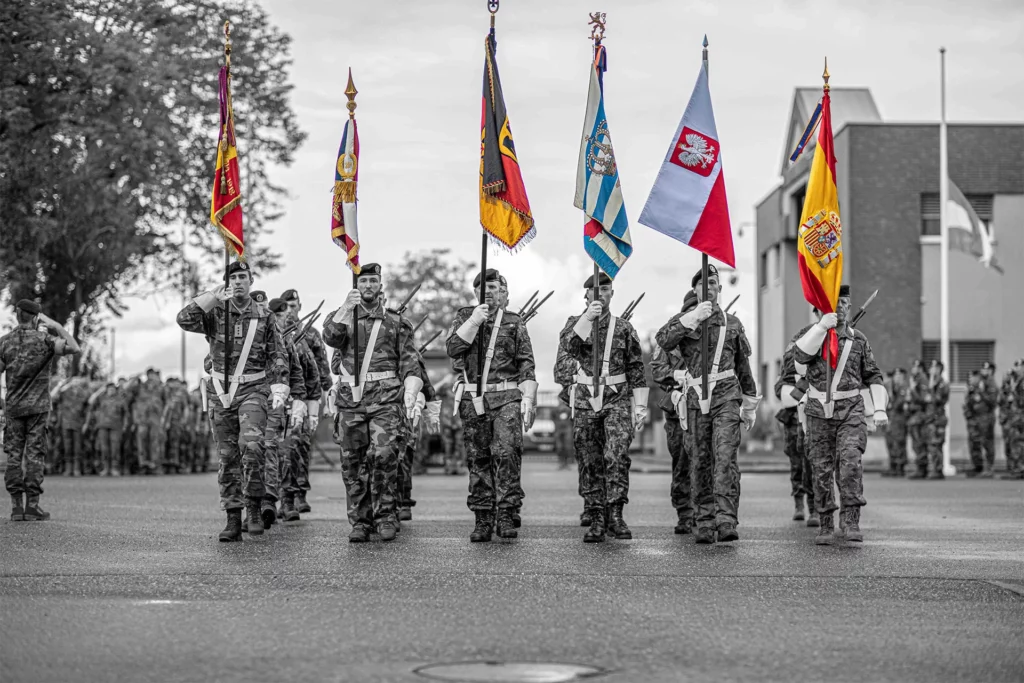
In Eurocorps key personnel rotates regularly. This system fosters multinational representation, ensuring that each nation involved has the opportunity to contribute to decision-making and leadership. The rotation helps promote fairness and inclusivity, allowing all member nations to have a stake in the organization’s direction, while encouraging collaboration and diverse perspectives from all nations.
COMEC ROTATION PLAN
BELGIUM
2021
POLAND
2023
SPAIN
2025
GERMANY
2028
FRANCE
2031
MULTINATIONAL DECISION-MAKING
The Common Committee, composed of the chiefs of defence and the political directors of the respective ministries of Foreign Affairs, is the senior decision and command body for the Eurocorps. The decision to commit Eurocorps for whatever mission will always remain an exclusive responsibility of its framework nations.
33
Editions' Common Committee
Chairman and Expert Representation from All Eurocorps Nations
Shared Decision-Making
STRENGTHENING RECONCILIATION
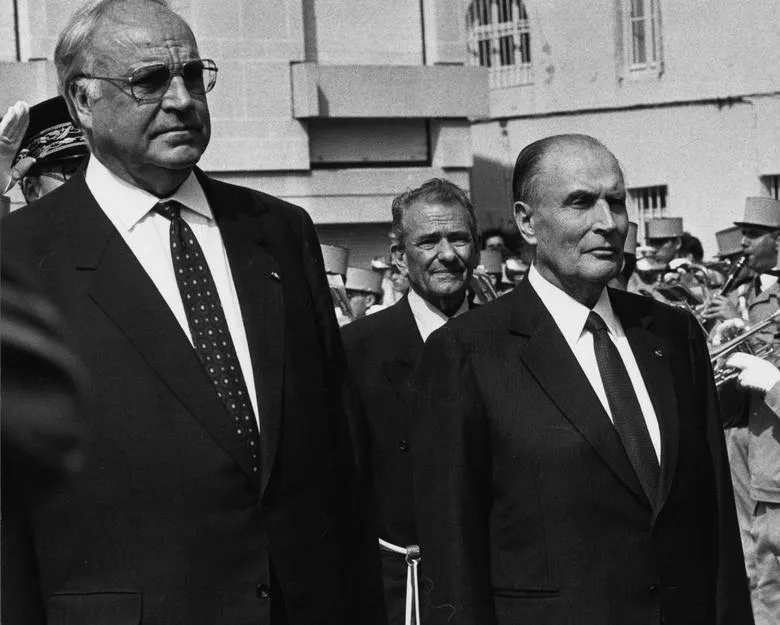
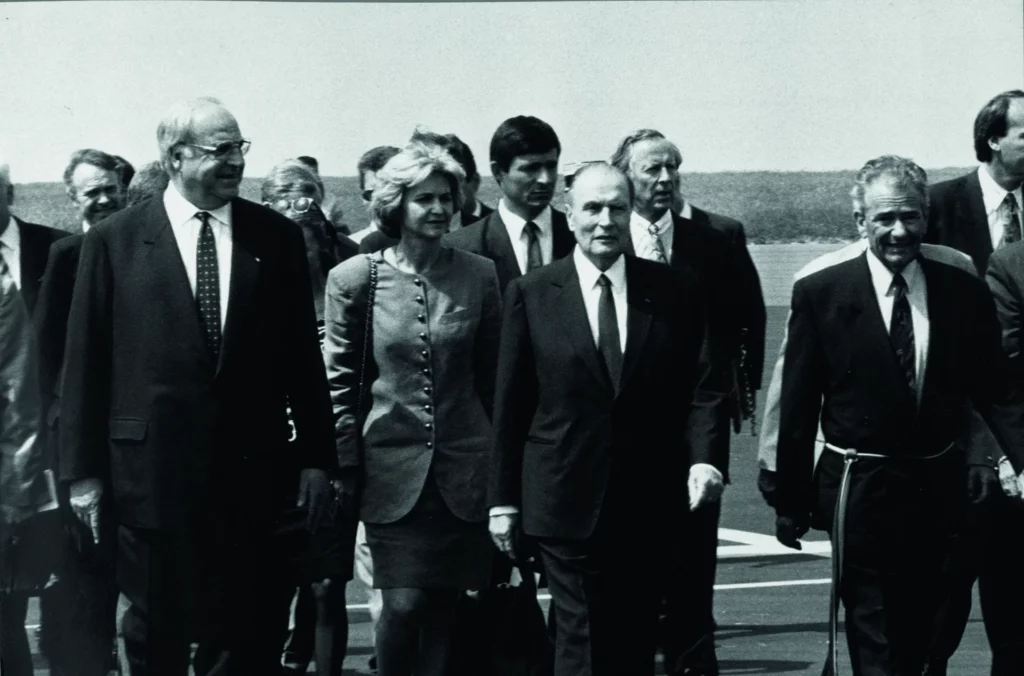
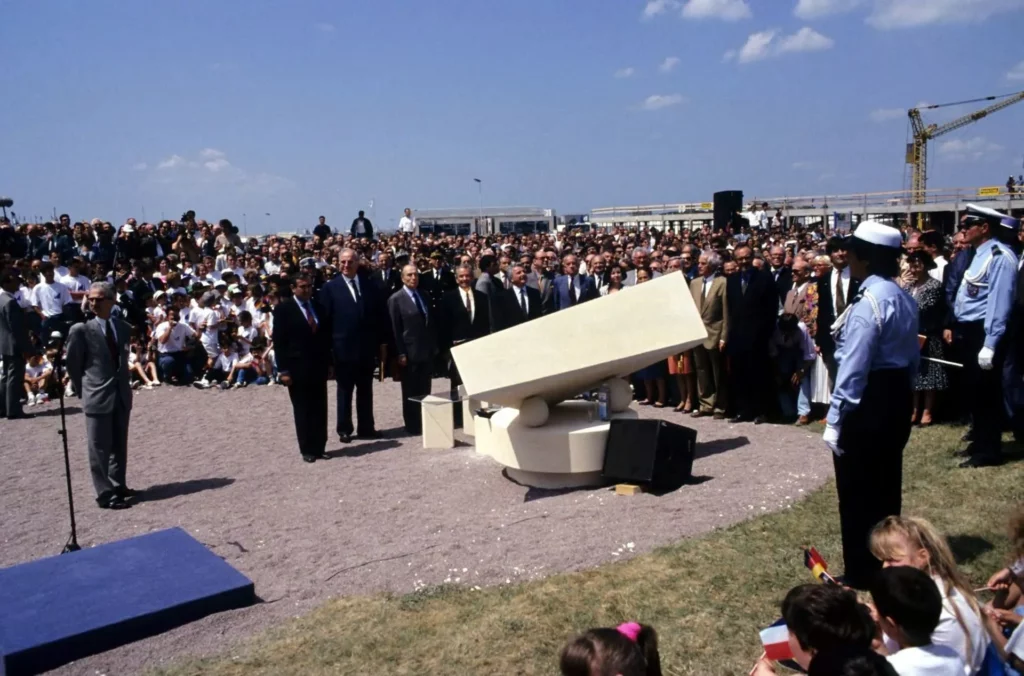
In October 1991 the former French president, Francois Mitterand and the former German Chancelor Helmut Kohl agreed to strengthen the reconciliation between their two countries and to foster the idea of the common european defence.
A few months later, in May 1992, both countries set up a Franco-German Corps in Strasbourg – a unit which financing and commanding would be equally shared amongst the two countries. The ideas laid down in the La Rochelle declaration, which is considered as the founding act of Eurocorps. A couple of weeks later both countries agreed to open Eurocorps to members of the western european Union. 1993 Belgium, 1994 Spain, 1996 Luxembourg and 2021 Poland joined Eurocorps as Framework Nations (FN).
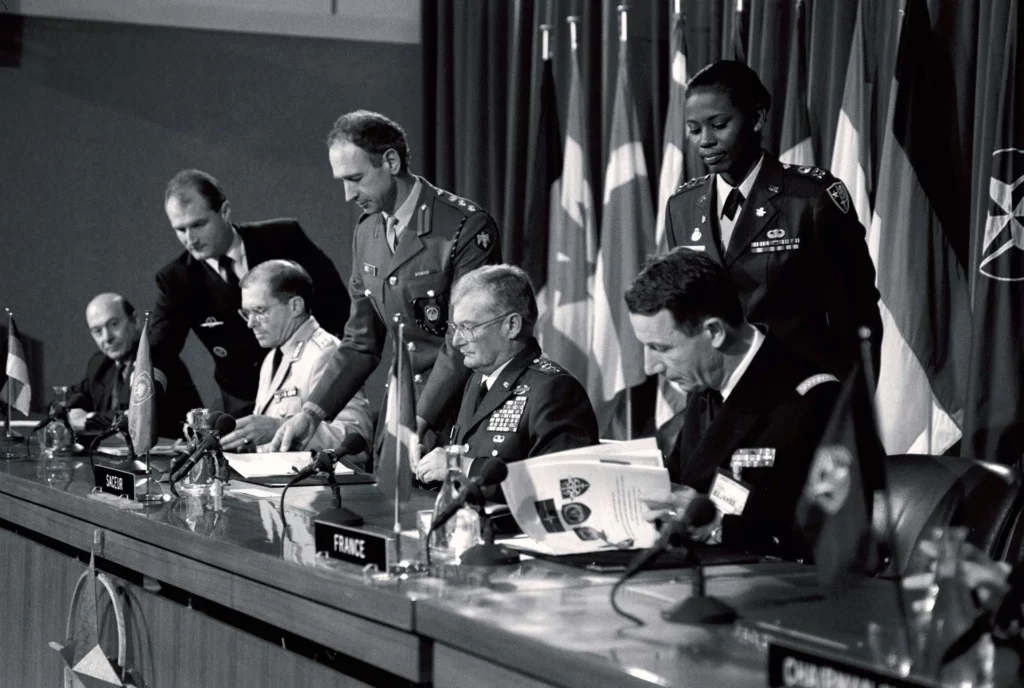
The La Rochelle summit already included the conditions of a partnership with NATO, which was implemented shortly after through the SACEUR‘s agreement in Jan 1993.
1992
Signed in La Rochelle
Foundations of Duality
© Sud-Ouest
EMBODYING THE WILL OF THE FRAMEWORK NATIONS
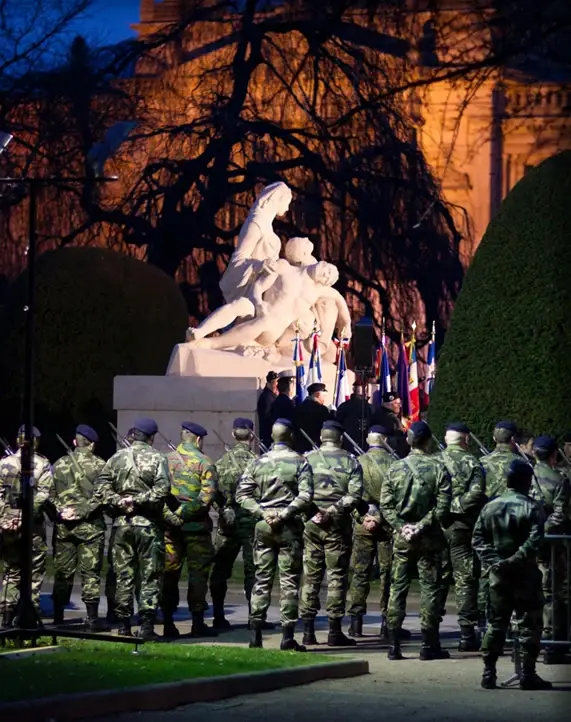
On November 22, 2004, the Treaty on the European Corps and the Status of its Headquarters was signed in Brussels. This agreement, concluded twelve years after Eurocorps was established, marked a decisive step in formalizing the collective commitment of the five Framework Nations at the time—Belgium, France, Germany, Luxembourg, and Spain. It provided Eurocorps with a clear and legally recognized foundation, reinforcing its status as a permanent multinational structure. Poland later joined as the sixth Framework Nation on December 20, 2021. With the treaty in force, Eurocorps acquired a unique legal identity, classified as a sui generis entity—a designation reserved for organizations with a distinctive nature and purpose under international law.
2004
Signed in Brussels
2009
Entered into Force
To provide the best experiences, we use technologies such as cookies to store and/or access device information. Consent to these technologies will allow us to process data such as browsing behaviour or unique IDs on this site. Not consenting or withdrawing consent may negatively affect certain features and functions.