EUROCORPS
A FORCE FOR
THE EUROPEAN UNION
AND NATO
Address
Eurocorps Headquarters
Quartier Aubert de Vincelles
4 Rue du Corps Européen
BP 70082
F-67100 STRASBOURG
HQ Support Battalion
Quartier Lizé
3 Rue de Solignac
BP 67081
F-67100 STRASBOURG
LASTEST NEWS
Foundation of European defense
In the wake of the Second World War—a conflict that ended centuries of internal strife, devastated the European continent, and claimed millions of lives—European nations recognized that lasting peace depended on mutual understanding.
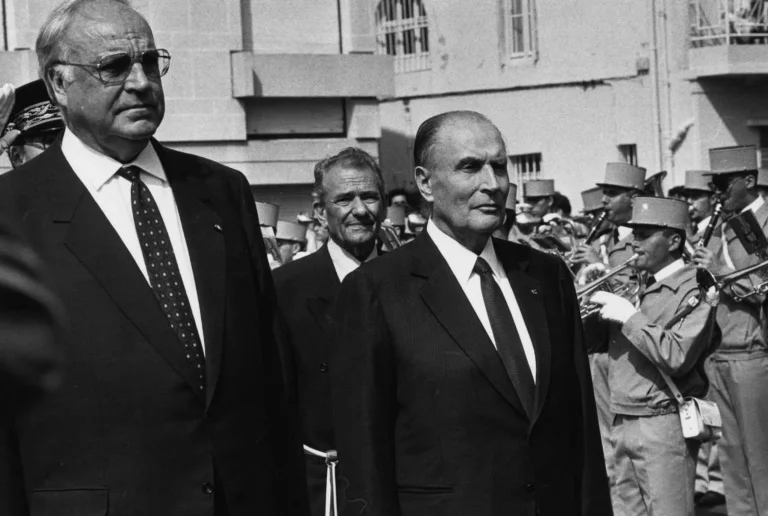
At the 59th Franco-German summit in La Rochelle, French President François Mitterrand and German Chancellor Helmut Kohl signed the La Rochelle Report, officially creating Eurocorps.
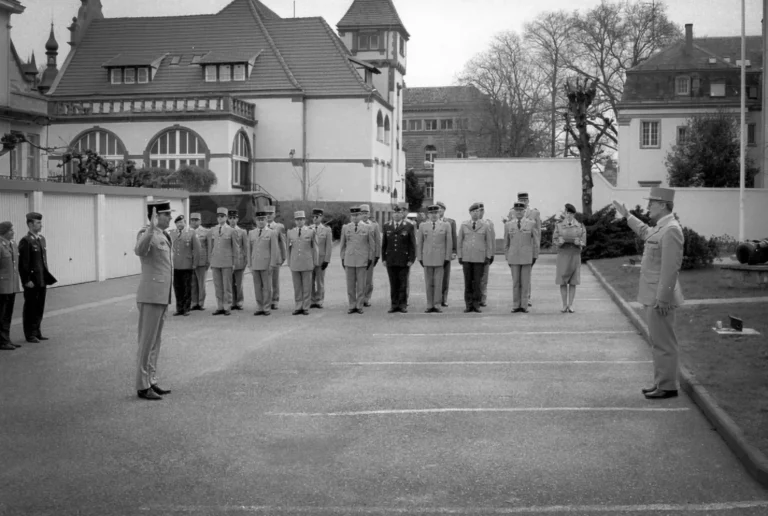
In the summer of 1992, long before Strasbourg officially became the host city for the headquarters, a few officers applied the fait accompli policy, moving into the Sturm barracks, not far from the cathedral. A month after the signature of the La Rochelle Report, French and German officers formed the core of the “Eurocorps Build-up Staff”. Since then, the Eurocorps has become a familiar institution in Alsace.
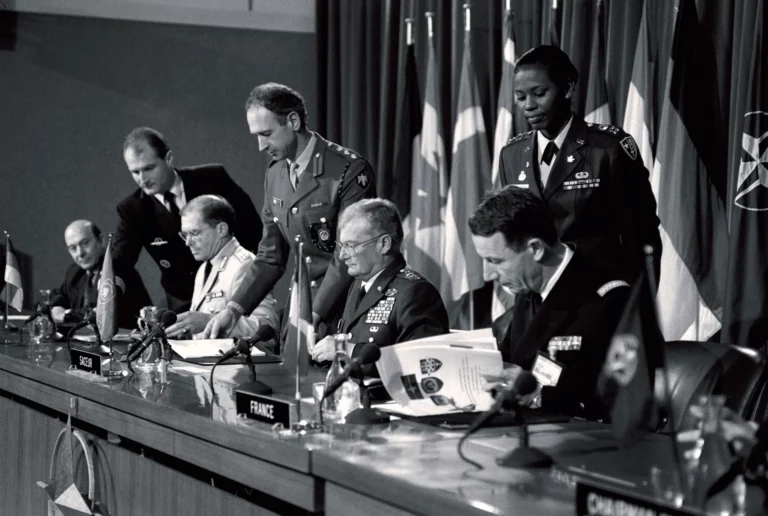
The SACEUR Agreement, signed on 21 January 1993, defines Eurocorps’ conditions of employment within NATO. This agreement details the missions, the expertise required for mission planning and the subordination of Eurocorps to the NATO Commander-in-Chief.
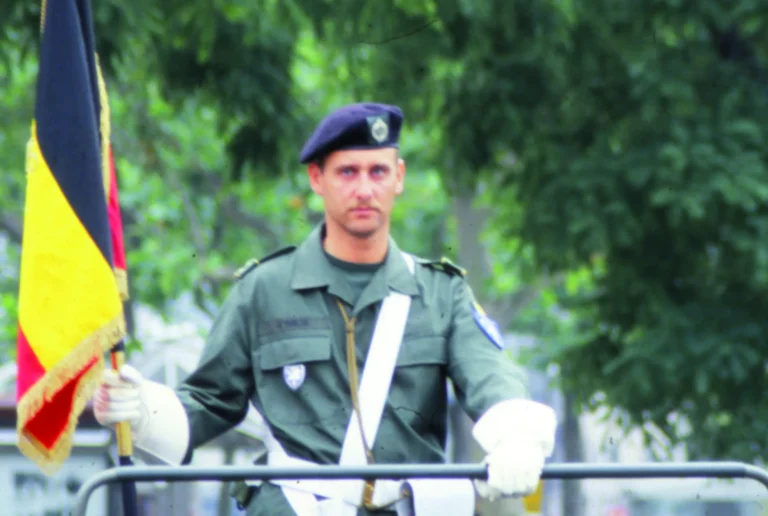
The Belgian government decided to join the Eurocorps as a Framework Nation. The first Belgian soldiers arrived in September of the same year. The bulk of the contingent followed in the summer of 1994.
The Spanish government decided to join the Eurocorps as a Framework Nation. The first Spanish officers arrived during that same summer.
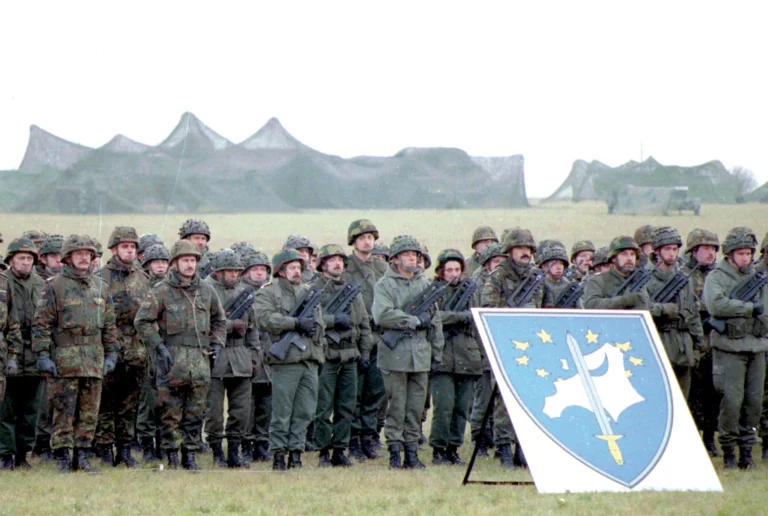
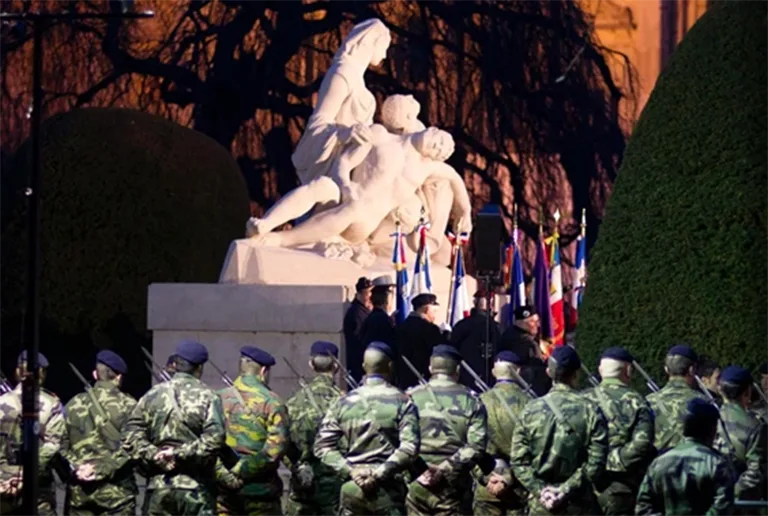
During a ceremony on the ice-cold airfield of Laon-Couvron (France) the Commanding General, Lieutenant General Helmut Willmann, declared the Eurocorps available for operations in the presence of the Ministers of Defense of the Eurocorps framework nations.
Luxembourg’s liaison officer arrived in 1995 and is now a fully-fledged member of the Eurocorps staff. Following a decision by its government, Luxembourg joined Eurocorps.
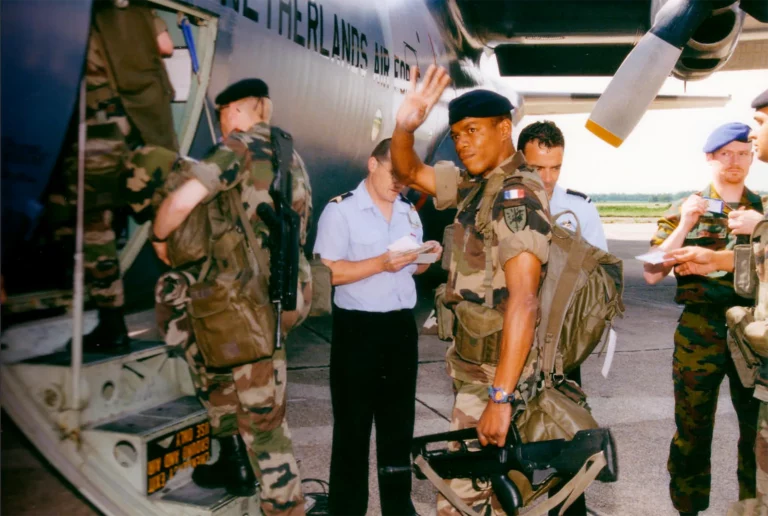
Eurocorps undertook its first operational commitment in support of a NATO mission in 1998, when personnel from the Headquarters Staff and the Headquarters Support Battalion deployed to Sarajevo. On 27 February 1998, the Eurocorps Common Committee decided to place a contingent of 150 personnel at the disposal of the NATO Stabilization Force in Bosnia-Herzegovina (SFOR) for a period of 18 months, organized into three successive rotations. The first contingent arrived on 13 May 1998, followed by the second rotation from January to June 1999 and the third from July to December 1999. Beyond the increased public and media visibility, this deployment provided Eurocorps Headquarters and its personnel with essential NATO operational experience and laid the groundwork for future engagements.
At the European Summit in Köln (3-4 June 1999) the European Union expressed its desire to have multinational forces prepared for future crisis management tasks. The Eurocorps Framework Nations declared that Eurocorps would be made available for employment by the EU.
The first Eurocorps soldiers departed Strasbourg on 5 March 2000. On 18 April 2000, Lieutenant General Ortuno formally took over command from German General Reinhardt in the presence of SACEUR, U.S. General Wesley Clark. A total of 350 Eurocorps personnel took part in the operation, which involved contributions from 39 countries. For the first time, a European headquarters outside NATO’s integrated military structure assumed command of NATO forces.
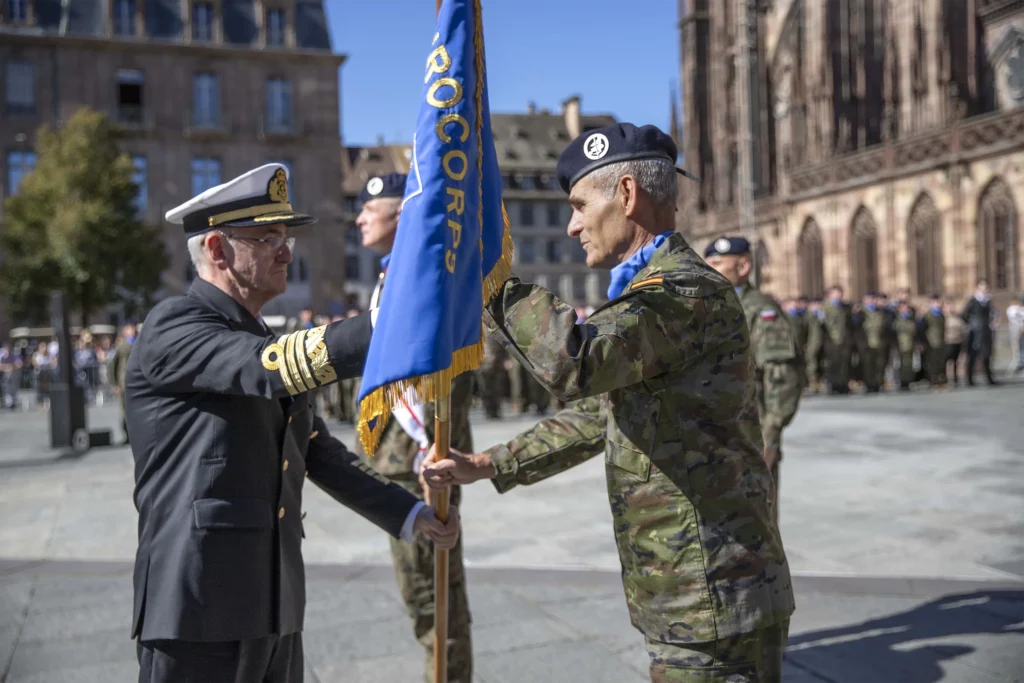
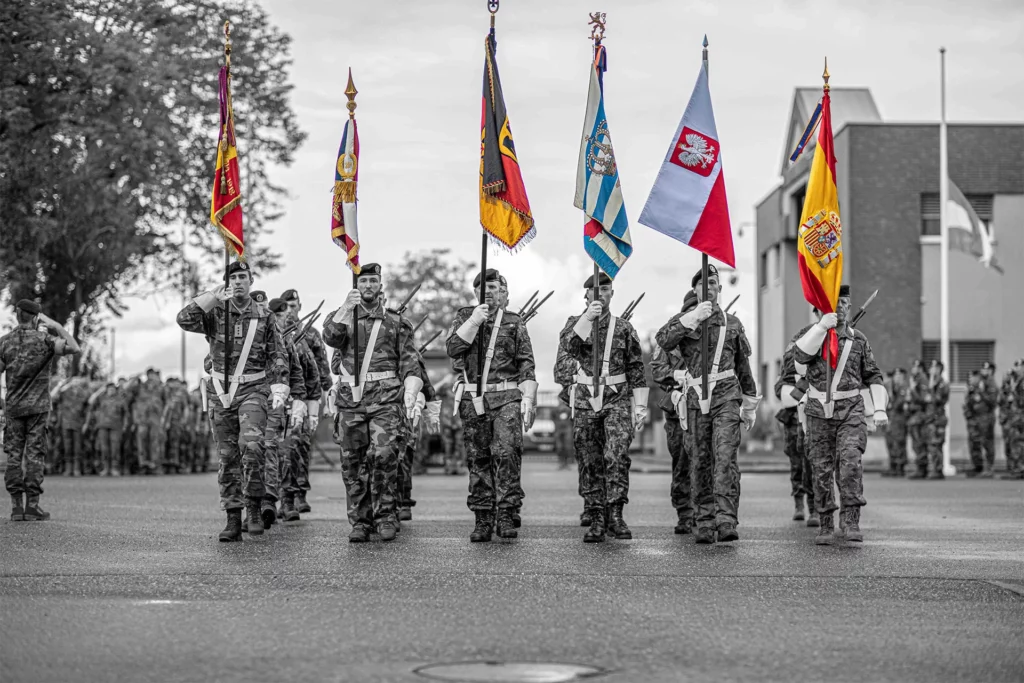
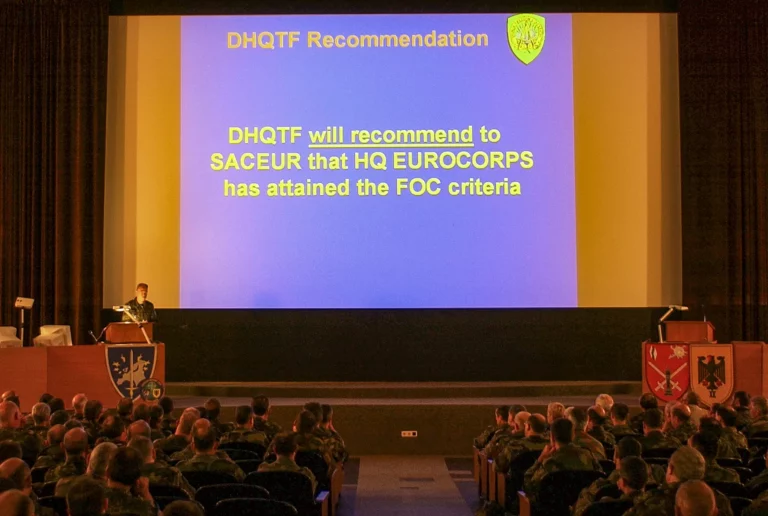
The North Atlantic Council certified Eurocorps as a NATO Rapid Deployable Corps with Fully Operational Capability (FOC).
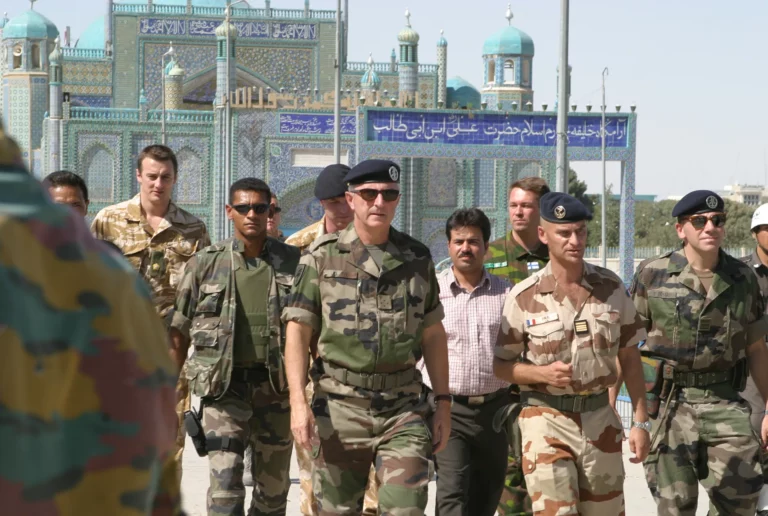
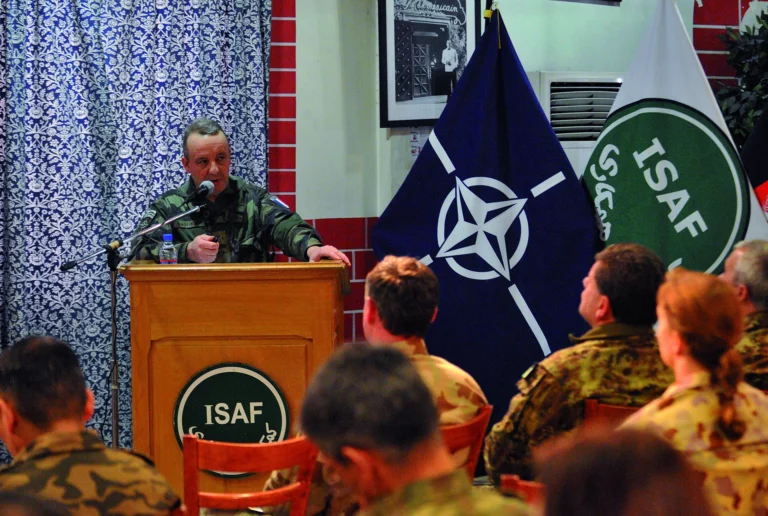
At 10 a.m. local time in Kabul, Lieutenant General Jean-Louis Py assumed command of ISAF VI. During a ceremony led by German Lieutenant General Gerhard Back, Canadian Lieutenant General Rick Hillier officially handed over command. ISAF VI’s primary mission was to support the organization of free and fair presidential and parliamentary elections in Afghanistan.
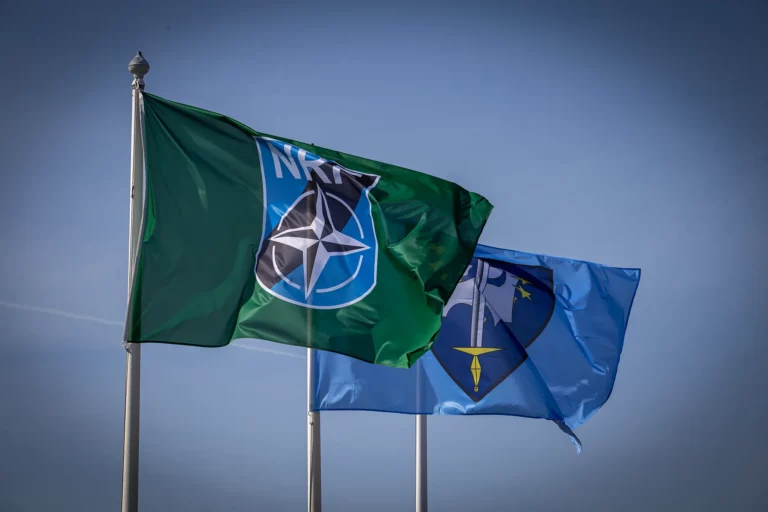
From 1 July to 31 December 2006, Eurocorps was on standby for the seventh rotation of the NATO Response Force (NRF 7), ready to deploy on short notice in support of NATO operations.
Signed on 22 November 2004, the Treaty of Strasbourg was ratified by all Framework Nations and entered into force on 26 February 2009. The agreement granted Eurocorps a distinct legal status among multinational military formations, establishing its own legal standing and defining the legal status of its headquarters and personnel.
On the 1 November 2011, Lieutenant General Olivier de Bavinchove, Commander of Eurocorps, officially became Chief of Staff of the International Security and Assistance Force (ISAF), commanded by US General John Allen. In parallel, General de Bavinchove was appointed national representative for all French forces deployed in Afghanistan. Together with its Spanish counterpart in Valencia (the NRDC-ESP), the Eurocorps was deployed in Afghanistan from January 2012 to January 2013. This period saw the handover of security responsibilities to Afghan forces, the phased withdrawal of coalition troops, and a restructuring of the operation’s command.
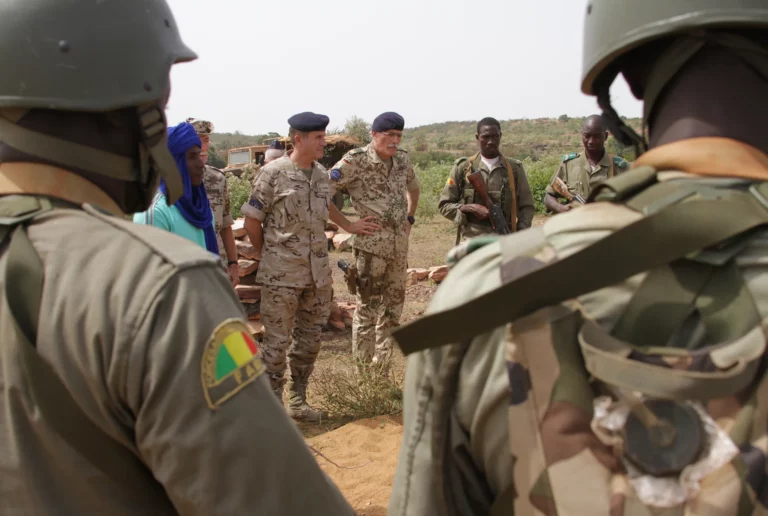
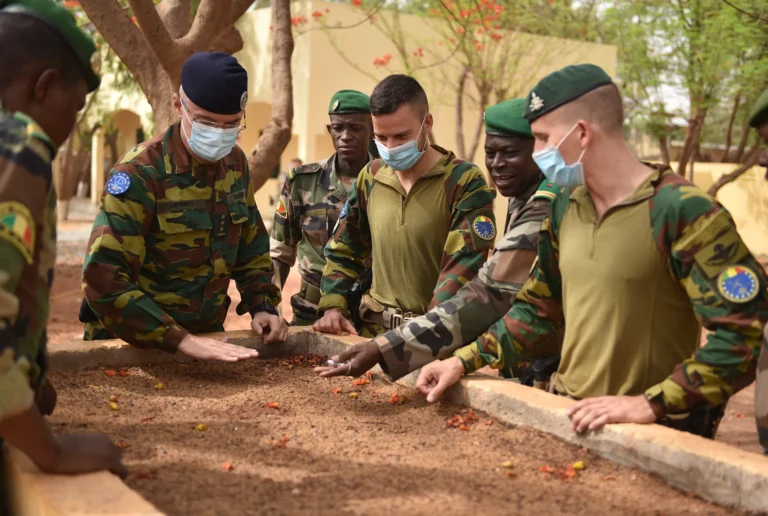
Eurocorps Chief of Staff Brigadier General Franz Pfrengle took command of the European Training Mission in Mali (EUTM Mali) in Bamako. Attended by the defense ministers of Mali, Germany, Spain and Austria, the transfer of authority also marked Eurocorps' first commitment under the European Union banner.
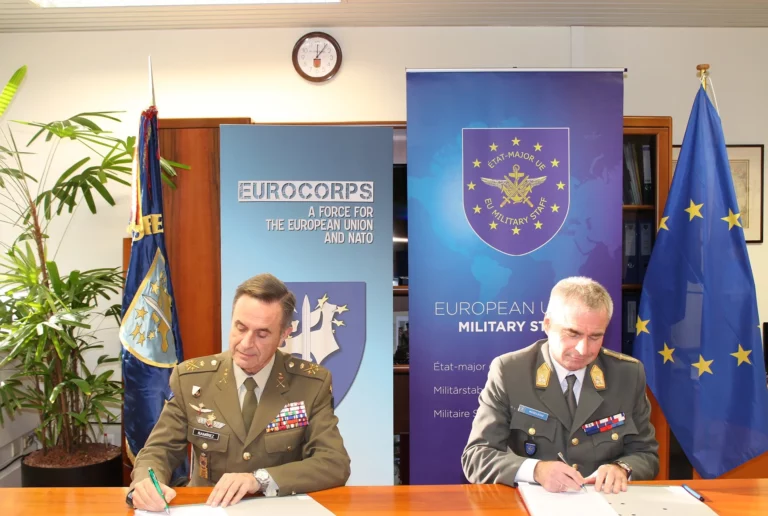
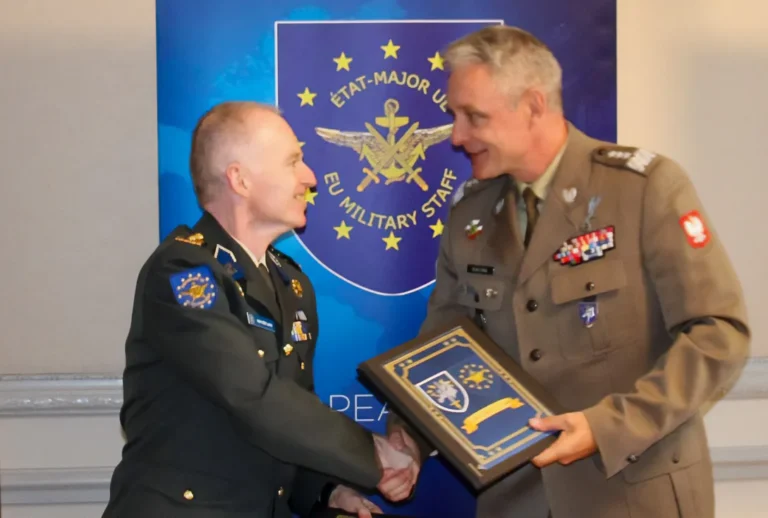
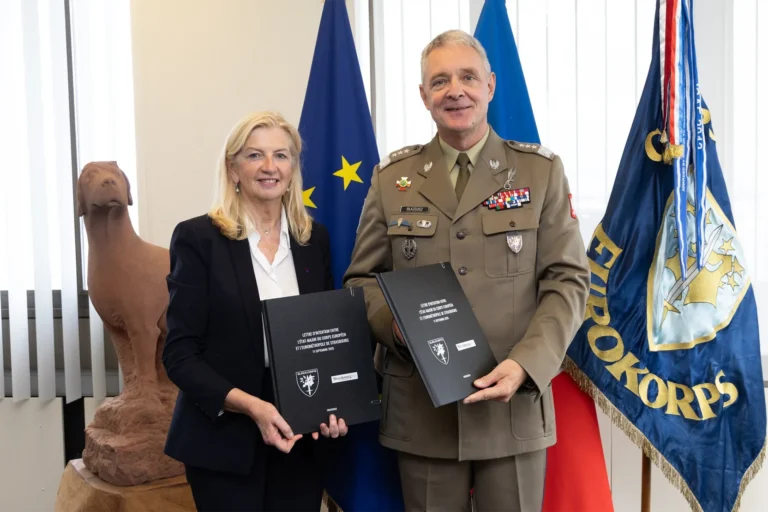
The Director General of the European Union Military Staff (EUMS), Lieutenant General Wolfgang Wosolsobe, and the Commanding General of Eurocorps, Lieutenant General Alfredo Ramίrez, signed a letter of intent in Brussels. The EUMS and the Eurocorps expressed their mutual interest in fostering close relations, coordinating efforts to reach common objectives and establishing a framework for bilateral cooperation. This framework would include information sharing, joint training and education initiatives, and improved crisis response capabilities. The agreement also aimed to position Eurocorps as a preferred EU military asset for the full spectrum of crisis management operations.
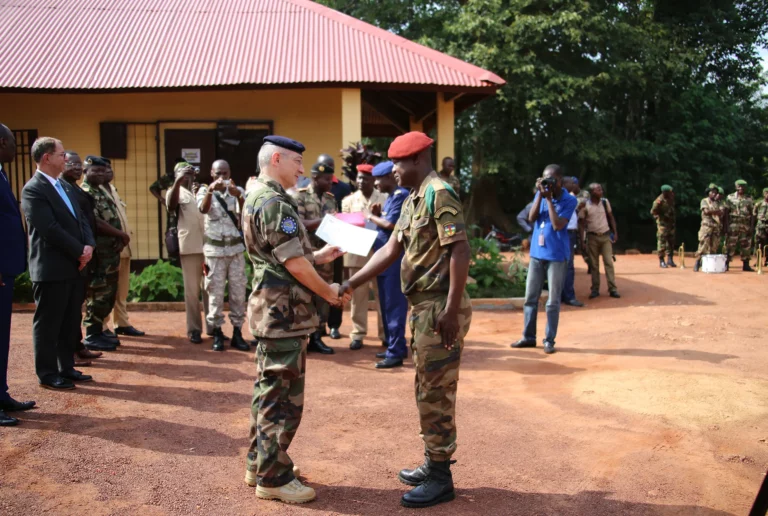
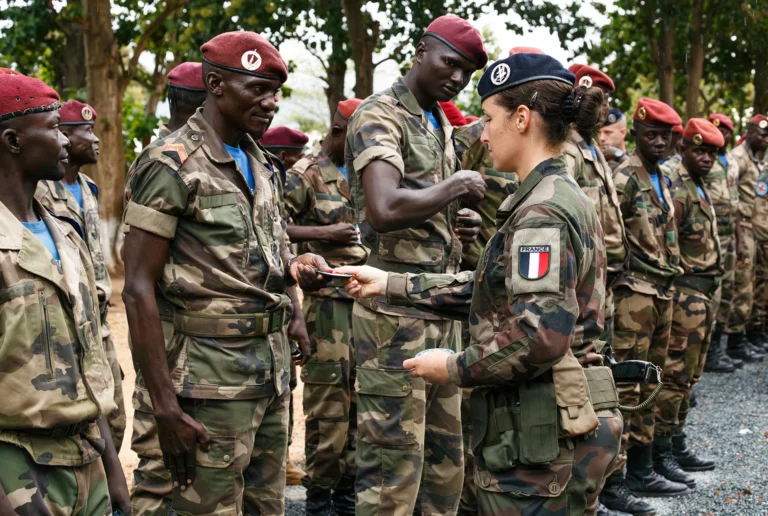
In line with a decision by the Council of the European Union, Eurocorps Deputy Commander, General Eric Hautecloque-Raysz, took command of the European Training Mission in the Central African Republic (EUTM CAR) in the second half of 2016. Eurocorps provided the core of the mission headquarters in Bangui.
In Stavanger, hundreds of Eurocorps personnel set to work at NATO’s Joint Warfare Centre to earn certification as Land Component Command for the NATO Response Force (NRF). The certification process involved several phases, including battle staff training and a major NATO exercise simulating high-intensity warfare. Soldiers also handled complex logistical operations, relying on both advanced technology and strong coordination. After two months of rigorous preparation and evaluation, Eurocorps was officially certified and ready to assume its NRF standby role.
In the lead for NRF, Eurocorps was prepared to command and control the land forces of the NATO Response Force in the event of a crisis. Thus, the Eurocorps was able to lead up to 65,000 soldiers with a Notice to Move of just a few days. The NRF standby phase concluded in January 2021.
Eurocorps supplied key personnel for the European Training Mission in Mali across two rotations, beginning in January 2021 and continuing for approximately one year. Key personnel included the Mission Force Commander, soldiers stationed at the Headquarters and the Advisory Group or the Training Task Force. For this multinational mission, Spain took the lead for the first rotation and Germany for the second.
Eurocorps will provide the key personnel in European Traning Mission in Central African Republic for two rotations starting in September 2021, i.e. for about one year. The composition is multinational, but French has taken the lead for the first rotation and Belgium for the second.
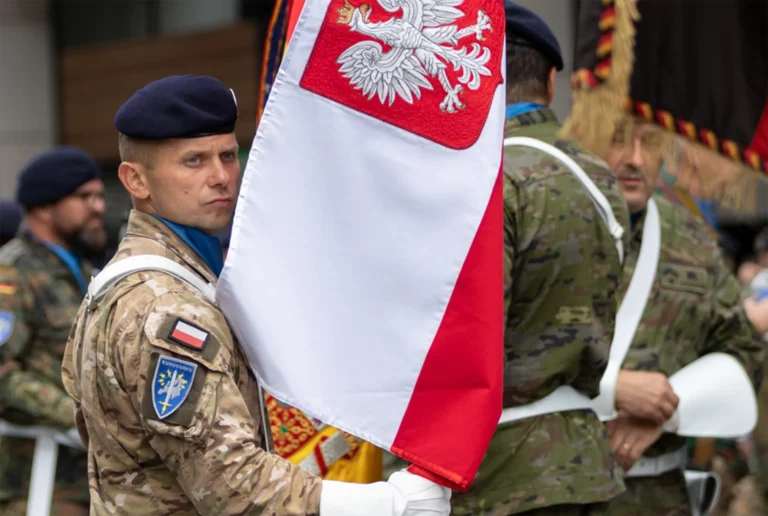
At the end of November 2021, the Republic of Poland agreed to become a Eurocorps Framework Nation by signing a Joint Declaration of Intent. One month after the anticipated signing of the Note of Accession, Poland officially became the sixth Framework Nation of Eurocorps.
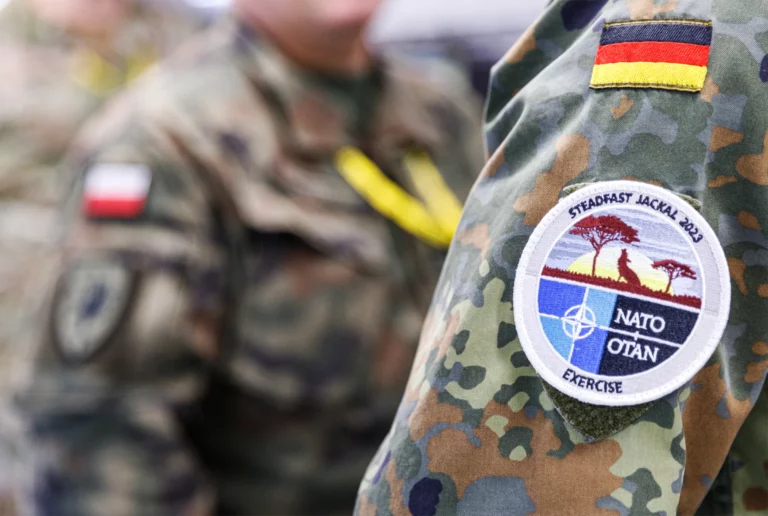
The training led to a certification (2023) in the NFS JF HQ role as foreseen in NATO’s Long Term Rotation Plan. 800 participants from 18 NATO member and partner states. Steadfast Jackal 2023 was based on a 360° strategic fictitious scenario developed by Joint Warfare Centre. EC commanded a joint force around 40,000 PAX in an extremely extended theatre of operations.
From 1 January to 31 December 2024, Eurocorps remained on standby for potential deployment in crisis response operations, peace support missions, non-combatant evacuation operations, humanitarian assistance, and disaster relief. In support of Ireland’s EUBG25 commitment, ten Irish officers and NCOs were deployed to the EUBG (F)HQ Eurocorps in Strasbourg.
Force Headquarters (F)HQ of the EU Battlegroup (EUBG 25) in the framework of EU Rapid Deployable Capacity (RDC).
To provide the best experiences, we use technologies such as cookies to store and/or access device information. Consent to these technologies will allow us to process data such as browsing behaviour or unique IDs on this site. Not consenting or withdrawing consent may negatively affect certain features and functions.