Milex 2026

Eurocorps Force Headquarters Leads EU Readiness in Spain as MILEX26 Enters Decisive Phase

12 June 2026

Zaragoza, Spain, 12 June 2026. The date carries particular significance for Spain as host nation of MILEX 26. On 12 June 1985, Spain signed the treaty leading to its accession to the European Union, with membership taking effect on 1 January 1986. Forty-one years later, Zaragoza has become the operational hub of one of the European Union’s most important multinational exercises, reflecting the continued evolution of European defence cooperation.

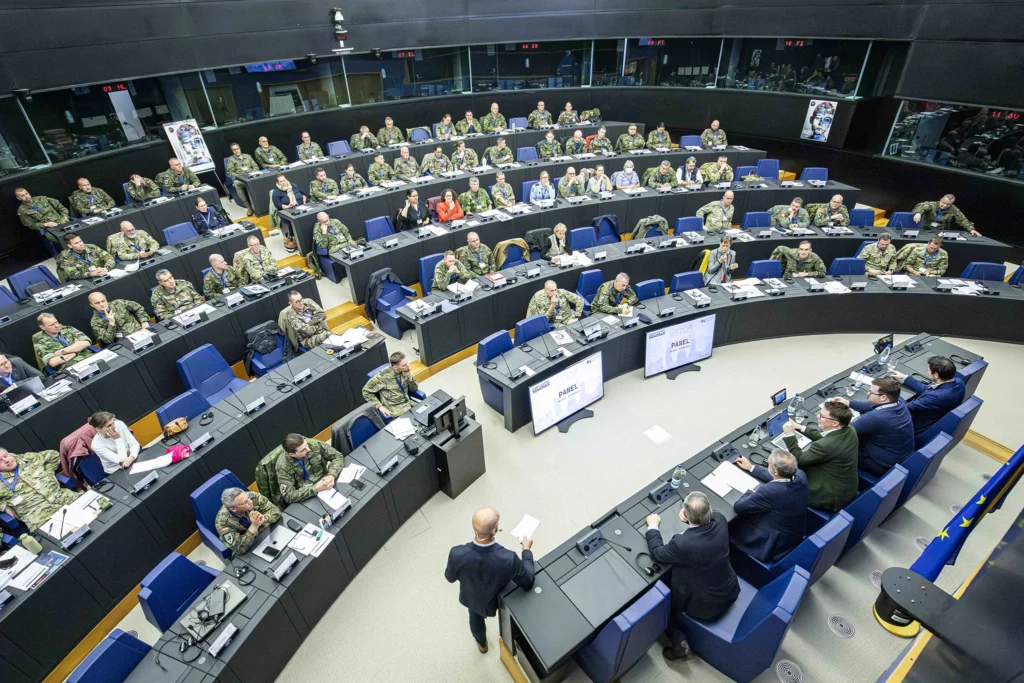
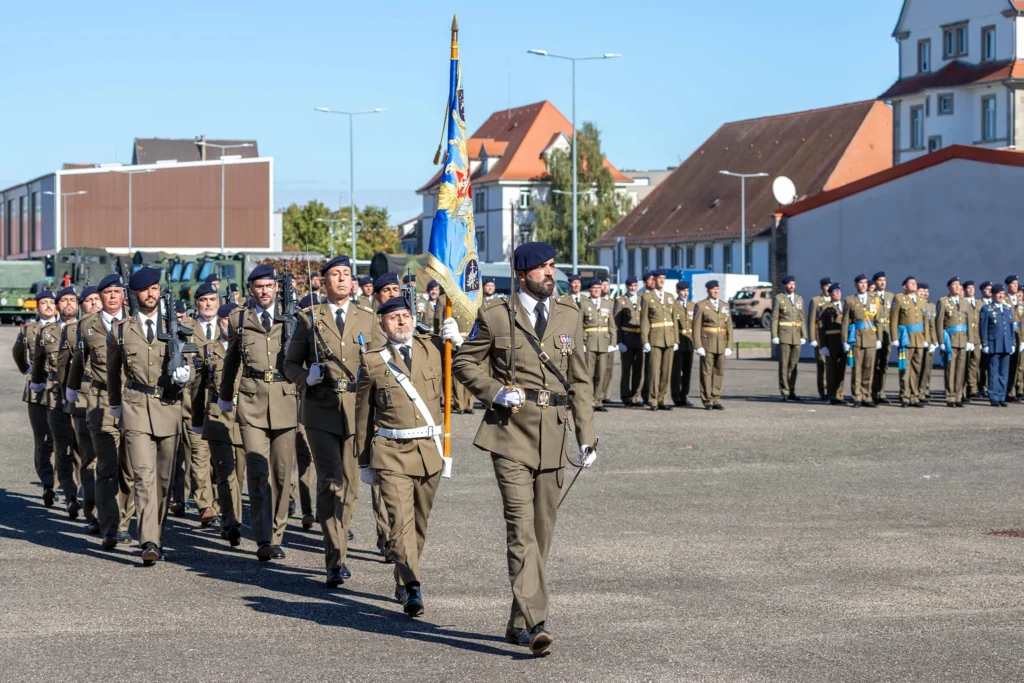
At the centre of MILEX26 stands the Eurocorps Force Headquarters, leading up to 2500 troops from 13 EU Member States under the operational direction of the EU Military Planning and Conduct Capability (MPCC) in Brussels. The exercise validates the European Union’s Rapid Deployment Capacity (RDC) and its ability to plan, deploy and command multinational forces under a single operational framework.

During this decisive phase, the Force Headquarters is commanded by Brigadier General Carlos Castrillo.

General, why is 12 June a significant date in the context of MILEX26 in Spain?

“It is a very important date for Spain. On 12 June 1985, Spain took a decisive step towards European integration by signing the treaty to join the European Union, leading to its membership on 1 January 1986. It represents a long-standing commitment to the European project. Seeing a major EU exercise unfold in Zaragoza on this date adds particular meaning to the operation.”

MILEX26 is the latest validation of the EU’s Rapid Deployment Capacity (RDC), a modular force of up to 5.000 troops designed to deploy rapidly and operate jointly under a unified command structure.

What is the RDC concept and why is it important?

“The Rapid Deployment Capacity gives the European Union a credible ability to respond quickly and collectively to crises. It provides decision-makers with military options when urgent action is required outside the European Union, whether for stabilisation, evacuation, humanitarian support or peace-related missions.”

What is the role of Eurocorps within this framework?

“Eurocorps provides the Force Headquarters for MILEX26. It is a multinational headquarters composed of six Framework Nations: Belgium, France, Germany, Luxembourg, Poland and Spain, supported by Associated Nations. Its role is to translate strategic direction into operational planning and execution. In practice, it ensures that multinational forces operate as one coherent structure.

Depending on the mission and force package, Eurocorps is capable of commanding and controlling large-scale multinational operations at corps level, including deployments of up to around 60.000 soldiers. This makes it a highly flexible and credible headquarters for the EU, able to scale from crisis response to high-intensity operations.”

How does Spain contribute as host nation?

“Spain plays a fundamental role. As host nation, it provides the training environment, infrastructure and operational support that makes large-scale multinational exercises possible. Without this framework, interoperability at this level could not be tested effectively.”

What is the key challenge in multinational command?

“The challenge is integration. Every nation brings its own procedures, experience and strengths. The task is to combine them into a single coherent command structure. That only works through trust, discipline and realistic joint training.”

Why is multinational training like MILEX26 so important?

“Modern crises require immediate and coordinated responses. Interoperability cannot be built during a crisis, it must be developed beforehand. Exercises like MILEX26 ensure that we are ready to operate together when needed.”

What is the added value of Eurocorps for EU operations?

“Eurocorps provides a proven multinational command capability. It enables the European Union to plan and conduct operations with forces from multiple nations in a structured and effective way. This is essential for credibility and operational readiness, something we have already demonstrated during stand-by phases and missions abroad.”

What does this moment mean to you personally?

“I often reflect on this,” Brigadier General Carlos Castrillo adds. “Only a few months after 12 June 1985, I began my military career here in Zaragoza as a young cadet at the Academia General Militar. I could never have imagined that, decades later, I would return to this same city, now responsible for the coordination of such an important exercise of the European Union’s Rapid Reaction Forces. I have always felt at home here; it remains a place strongly connected to my military roots.”

“Today, we are working to protect the security and stability of Europe, to strengthen the European Union’s ability to respond to crises, and to safeguard the shared interests and values of its Member States. To be doing this here, in the place where my military journey began, is something I could not have foreseen, but it is a great privilege.”