INTERVIEW WITH EUROCORPS PERSONNEL – OF3 PELEGRIN

27 November 2026

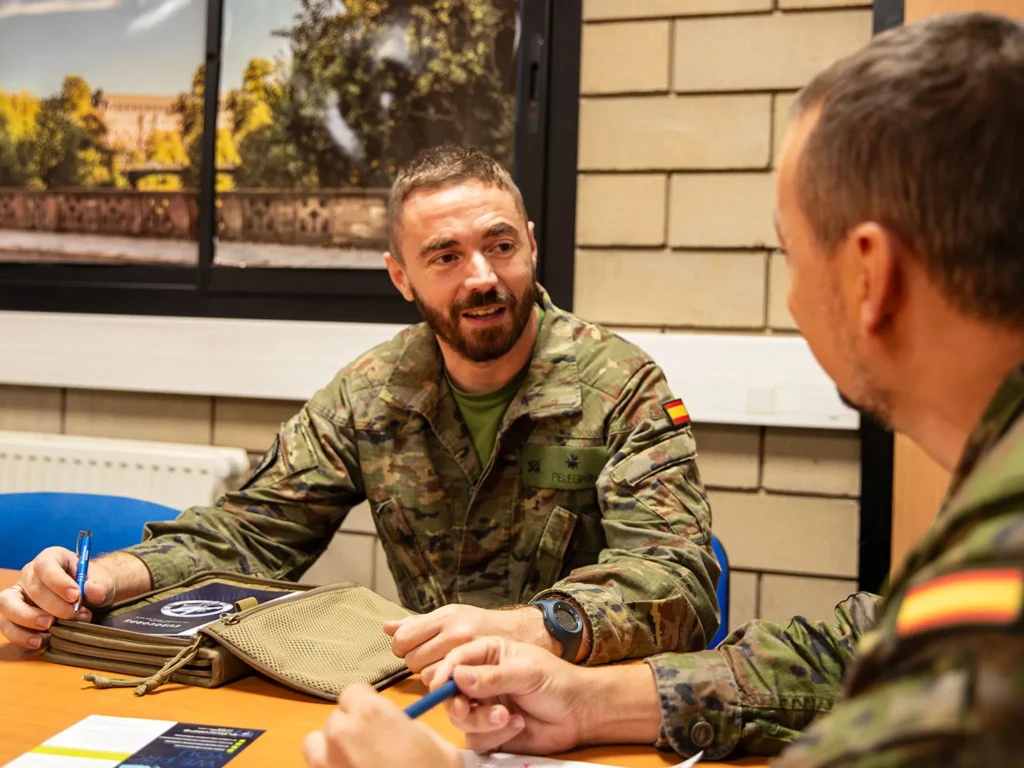
Major Joaquín Pelegrín graduated from the General Military Academy in 2012. He has since spent most of his career in mountain warfare units, serving as platoon or company commander of Alpine troops carrying out various training assignments and international missions. He was also deployed on EU, NATO and UN missions, in particular in Somalia, Lebanon, Mali and Iraq. Throughout, his primary mission focused on training, military assistance and international cooperation.

This experience has given him a better grasp of the challenges facing countries seeking to develop their own security forces as a key component of state-building. His sojourn in Iraq as a NATO advisor marked an important step in his career and allowed him to further his experience in security sector reform. He has been stationed at Eurocorps since July 2026, but continues to collaborate with the NATO Security Force Assistance Centre of Excellence (SFA COE) in Italy, sharing his expertise in the field as an instructor and expert.

Reforming the security sector and developing state capabilities: can you elaborate and explain why these two elements are vital in today’s world?

In short, the focus is on helping a country ensure the safety of its citizens by developing the necessary institutions and resources. The goal is not merely to train their troops, but to implement viable and sustainable training procedures that will remain after we leave. The aim is also to improve organization, procedures and even develop certain capabilities together.

Security is essential to the development of a state. We can provide training, counsel and even resources, but ultimately the goal is to enable the country to ensure its own security.

How have you gained so much experience in this field? Through education or operations/missions? Could you tell us about one experience and share a real-life example, an anecdote or a notable achievement?

Well, it happened almost naturally. I suppose it is an interest that developed through my missions in Africa and the Middle East and that is how I built my experience. In Somalia, I was the head of a multinational team of trainers, in Lebanon I worked in civil-military cooperation and in Mali, I was assigned to operations as part of a training mission. However, if I had to emphasize one experience, it would be my last assignment as a NATO advisor in Iraq.

There, I was able to make use of everything I had learnt both during missions and at home, and to actively participate in the reform of security as a whole. Let me give you the example of marksmanship. Our role extended beyond merely training snipers and instructors, we also advised them on how to implement their own training program.

Moreover, we collaborate to build this new capability by integrating snipers into units and creating procedures and concepts of employment. Coupled with efforts to disclose cases of corruption, integrate civilian protection and human rights into every action, and provide logistic advice, for instance, it is fair to say that we help reform the security domain.

How do you prepare to take on such responsibilities in the field?

You have to possess a thorough understanding of the subject you are advising on, as subject-matter expertise is always the most important criterion for being selected as an advisor. This expertise is acquired through training, time and dedication. It’s a responsibility that demands both enthusiasm and respect, given the critical impact our mission has on the nations in which we are deployed.

While not a formal requirement, the ability to adapt to the cultural and social environment and earn the trust and respect of local forces is essential. It is always the first step when assisting security forces.

With this in mind, I find it really helpful to learn as much as possible about local forces and even the people I will be working with directly. However, you must keep an open mind, be willing to listen and learn before advising.

What are the main steps to take to become involved in state-building when deployed as SSR advisor?

First, you need to understand the country’s real needs and the capabilities of its institutions. From that point on, the advisor can help improve organization, training and procedures while working hand in hand with the people in charge.

I would just like to emphasize that, as I said before, trust is fundamental. In my experience, local forces can instantly tell if someone is genuinely trying to help them or trying to impose their own model. The goal is to equip them with the necessary tools to assume their own responsibilities without forgetting to adapt them to their own reality and ways of doing things. Success is not measured by what we achieve, but by what they sustain after we leave.

All your experience and training led you to become a regular collaborator with the SFA-COE in Cesano di Roma. Could you tell us more about your involvement with them?

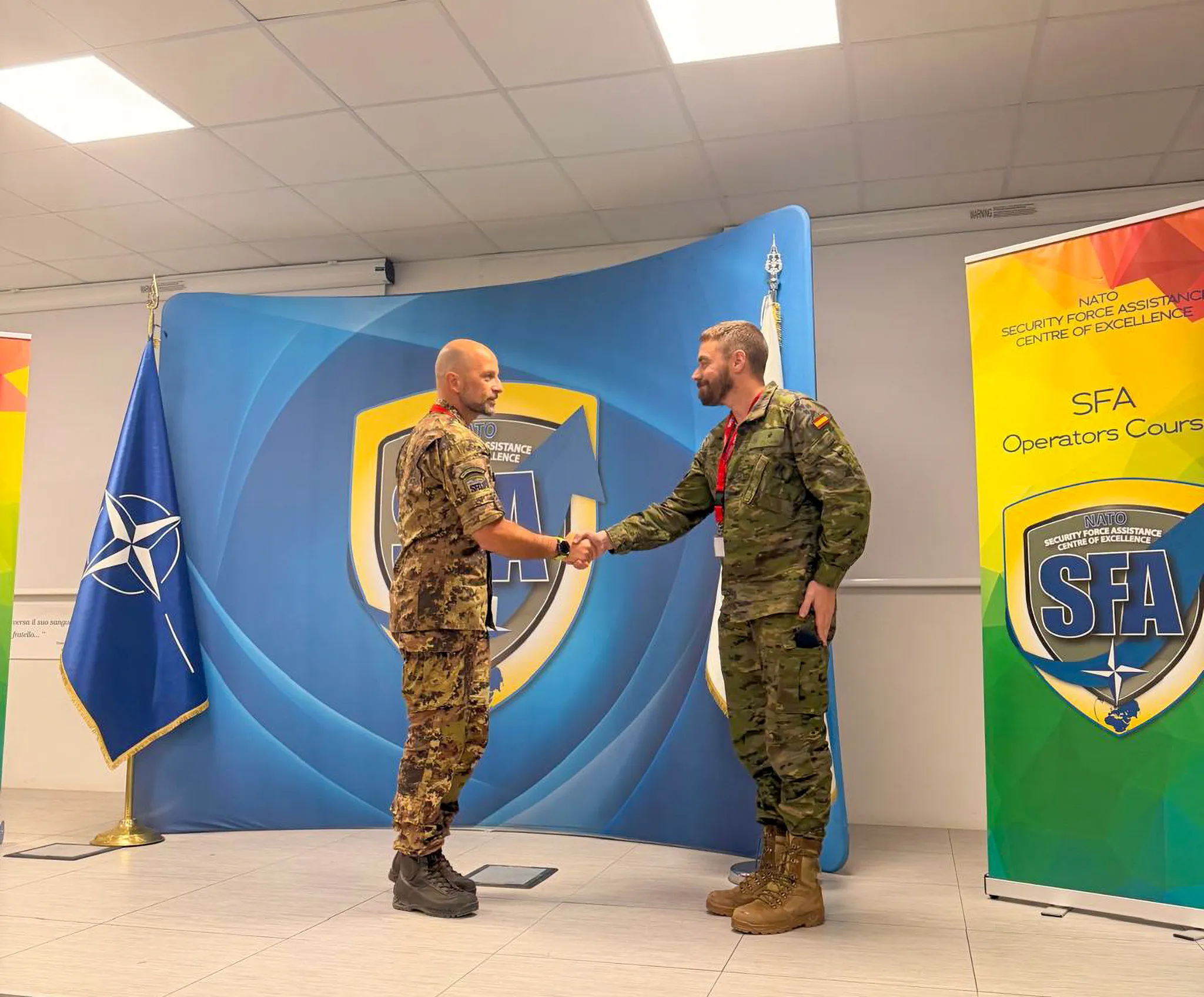
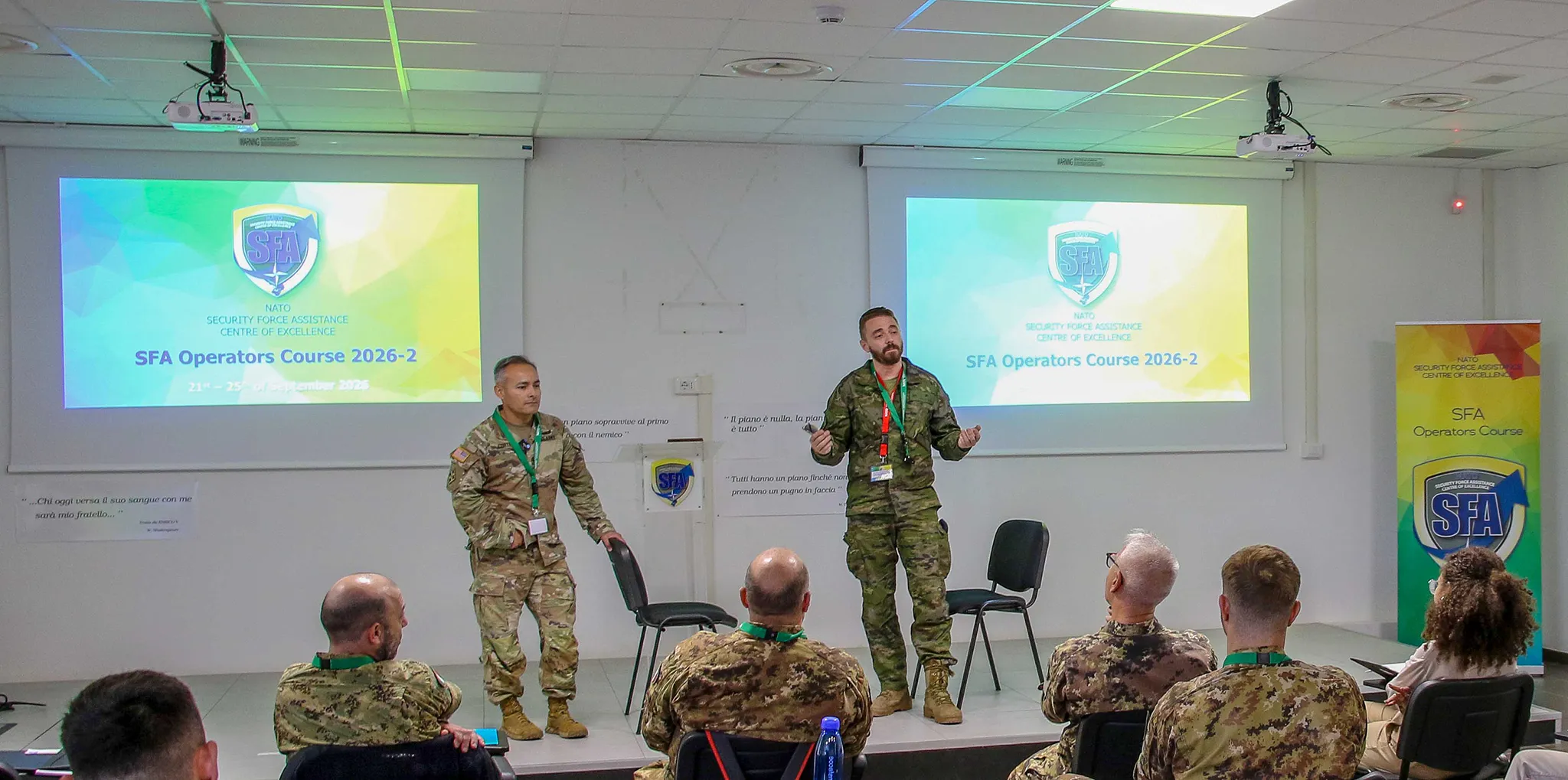
I started collaborating with the Centre of Excellence following my experience in Iraq, where I specialized in assisting security forces. I taught the operators course on several occasions, as well as seminars and training activities related to state capability-building. I tend to focus my contribution on lessons learnt and real-life examples based on my experience in the field.

Although not a new concept, assisting security forces has not long been addressed at NATO, and much of its content is therefore still under development. So I also work with the Centre of Excellence to evaluate and improve its training programs, as well as to develop its doctrines.

In the future, I hope to continue collaborating on other activities related to institutional consulting and capability development. This NATO Centre of Excellence is doing impressive work and the collaboration is a great opportunity to share knowledge and keep learning from other professionals.

What is the most important advice you give your students to help them tackle the major challenge that is supporting state-building?

Most students already have experience as instructors or mentors, as I did after my deployment in Somalia as part of the European Union mission. I stress the fact that training people is different from developing capabilities. As successful as a course is, if what is learnt is not integrated in the institution, it will have a limited impact.

Another element I usually emphasize is that our regulations must be a tool, not a limitation. SFA is complex by nature; if I try to apply Western regulations and doctrines to the letter, I will not meet my goal.

I also insist on humility and empathy. I find it useful to ask myself if I could live like the people I advise and teach. Not for six months, not just during working hours but 24 hours a day and throughout my entire career. It allows me to appreciate and respect our counterparts. From there on, if you really are trying to help, respect becomes mutual and it’s simply a matter of us all working together for a cause as worthy as the safety of our communities.

Lastly, we must be aware of the fact that we will not solve all the issues of a state on our own in six months. We will have an extremely limited impact but it is no reason to lose our motivation. That is something I learnt in Somalia, I thought ‘of course I won’t save the world but that doesn’t mean that I shouldn’t put effort and enthusiasm into it’.
Last question, what do you expect from this new chapter at Eurocorps?

It is a new opportunity to keep growing professionally. Moreover, working in a multinational environment is an honor and above all a great responsibility. Being here allows me to gain experience in planning and crisis management, as well as first-hand insight into the workings of an international headquarters with extensive experience in NATO and European Union deployments.

Moreover, it allows me to keep developing my expertise in assisting security forces. I am able to combine my work at Eurocorps with my collaboration with the Centre of Excellence, serving as a link between the two institutions to continue developing this capability, which is crucial to the success of our mission.